
Heat Pumps Rural Nova Scotia: What Homeowners Need to Know
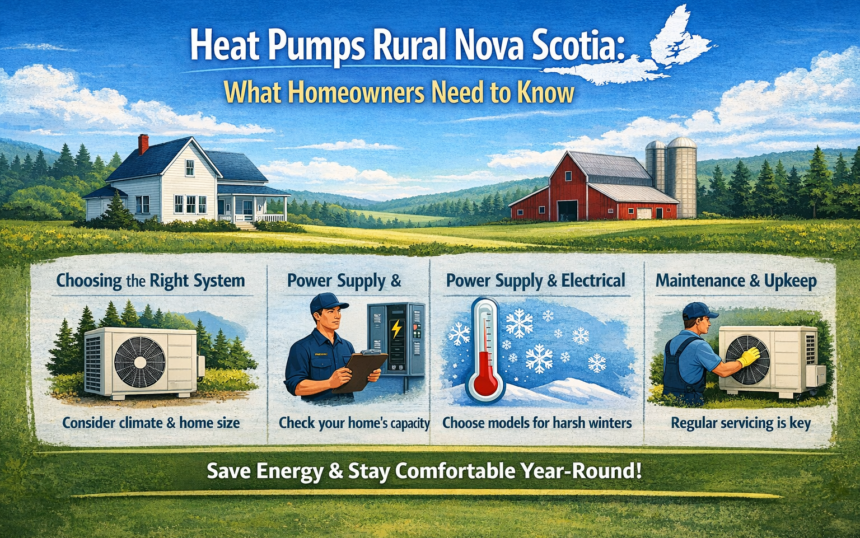
Heating a home in a rural area comes with unique challenges. For many homeowners, heat pumps in rural Nova Scotia have become a practical solution for improving energy efficiency while reducing reliance on oil heating.
However, rural properties often differ significantly from urban homes, which means system design and installation require additional consideration.
Why Rural Homes Are Different
Homes in rural Nova Scotia often have:
• Larger floor plans
• Older construction
• Varying insulation quality
• Greater exposure to wind and cold
These factors can affect how a heat pump performs and what type of system is required.
Do Heat Pumps Work Well in Rural Areas?
Yes — but proper setup is critical.
Modern cold-climate heat pumps can:
• Provide efficient heating in sub-zero temperatures
• Maintain consistent indoor comfort
• Reduce overall energy costs
However, performance depends heavily on system sizing and installation quality.
System Sizing for Larger Homes
Many rural homes require more heating capacity than smaller urban properties.
This may involve:
• Multi-zone ductless systems
• Larger ducted systems
• Hybrid setups for added capacity
Undersized systems are one of the most common issues in rural installations.
Electrical and Installation Considerations
Rural homes may require additional preparation before installation.
This can include:
• Electrical panel upgrades
• Longer wiring runs
• Outdoor unit placement to reduce wind exposure
These factors can impact both installation cost and system performance.
Heating Efficiency in Rural Conditions
Rural properties are often more exposed to wind and colder temperatures, which can increase heating demand.
To maintain efficiency:
• Homes should have adequate insulation
• Systems must be properly sized
• Installation should account for environmental exposure
When done correctly, heat pumps can still provide strong performance in these conditions.
Cost vs Long-Term Savings
While installation costs may be slightly higher in rural areas, many homeowners benefit from:
• Reduced fuel costs
• Lower maintenance compared to oil systems
• Improved energy efficiency
Over time, these savings can offset the initial investment.
The Importance of Experienced Installers
Rural installations require more planning than standard setups.
A qualified installer will:
• Evaluate the home’s heat loss
• Recommend the correct system configuration
• Ensure proper placement and setup
Several experienced installers operate across Nova Scotia, including companies such as Quinn Energy, which provide heat pump installations tailored to both urban and rural homes.
Final Thoughts
For homeowners considering heat pumps in rural Nova Scotia, these systems can provide efficient and reliable heating when properly designed and installed. Understanding the unique needs of rural properties is key to achieving the best results.
Frequently Asked Questions
Do heat pumps work in rural Nova Scotia?
Yes, when properly sized and installed.
Are rural installations more expensive?
They can be, depending on electrical and system requirements.
Can a heat pump heat a large rural home?
Yes, with the correct system configuration.