
Cold Climate Heat Pumps vs Standard Heat Pumps in Nova Scotia: What’s the Real Difference?
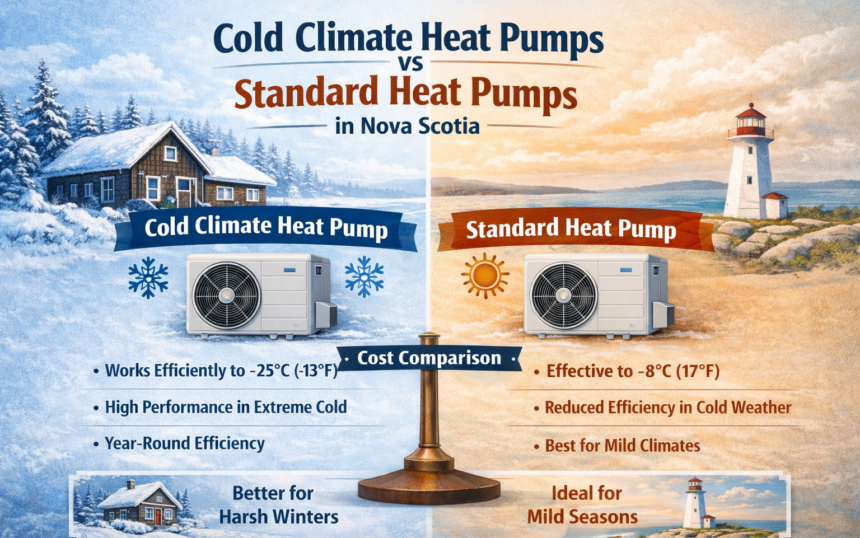
Nova Scotia winters aren’t mild. Temperatures regularly drop below freezing, and coastal humidity adds another layer of stress to home heating systems. That’s why many homeowners ask: Do I really need a cold climate heat pump in Nova Scotia, or will a standard model work fine?
The short answer? In most cases, cold climate models are the smarter long-term investment.
Let’s break it down.
What Is a Cold Climate Heat Pump?
A cold climate heat pump is specifically engineered to operate efficiently in sub-zero temperatures — often down to -25°C or lower.
Unlike standard heat pumps, cold climate systems:
- Maintain higher output in freezing weather
- Defrost more efficiently
- Use enhanced compressor technology
- Deliver consistent heat during extended cold snaps
In Nova Scotia’s climate, this matters more than many homeowners realize.
How Standard Heat Pumps Perform in Nova Scotia Winters
Standard heat pumps are typically rated for moderate climates. While they can technically operate below 0°C, their efficiency and heating capacity drop significantly as temperatures fall.
In colder regions like Halifax, Dartmouth, Bedford, and surrounding areas, this often means:
- More reliance on electric backup heat
- Higher power bills during winter
- Reduced indoor comfort during extreme cold
For short mild winters, a standard unit might suffice. But Nova Scotia regularly sees prolonged freezing temperatures — and that’s where performance gaps become noticeable.
Why Cold Climate Models Make More Sense in Nova Scotia
Cold climate heat pumps are designed for Canadian conditions.
Benefits include:
✔ Better heating output below -15°C
✔ Lower winter electricity spikes
✔ Improved long-term durability
✔ Greater eligibility for rebates and efficiency programs
✔ More consistent indoor temperatures
If you’re investing in a system expected to last 15–20 years, it’s worth installing one that’s built for the region.
Cost Difference: Is It Worth It?
Cold climate units typically cost slightly more upfront.
However, when factoring:
- Energy savings
- Reduced backup heating
- Rebates available in Nova Scotia
- Long-term system lifespan
The difference often balances out within several heating seasons.
When Might a Standard Unit Be OK?
There are rare situations where a standard system may work:
- Smaller, well-insulated homes
- Mild coastal microclimates
- Homes keeping oil or propane as primary backup
But for most Nova Scotia homeowners upgrading from oil heat, cold climate systems are the safer choice.
Final Thoughts
If you’re installing a heat pump in Nova Scotia, climate performance shouldn’t be optional — it should be a priority.
Choosing the right system from the start helps avoid winter frustration, rising power bills, and premature system wear.
A properly sized, properly installed cold climate heat pump ensures comfort through the coldest Atlantic winter nights.