
Basement & Garage Heating in Nova Scotia: Are Heat Pumps Worth It?
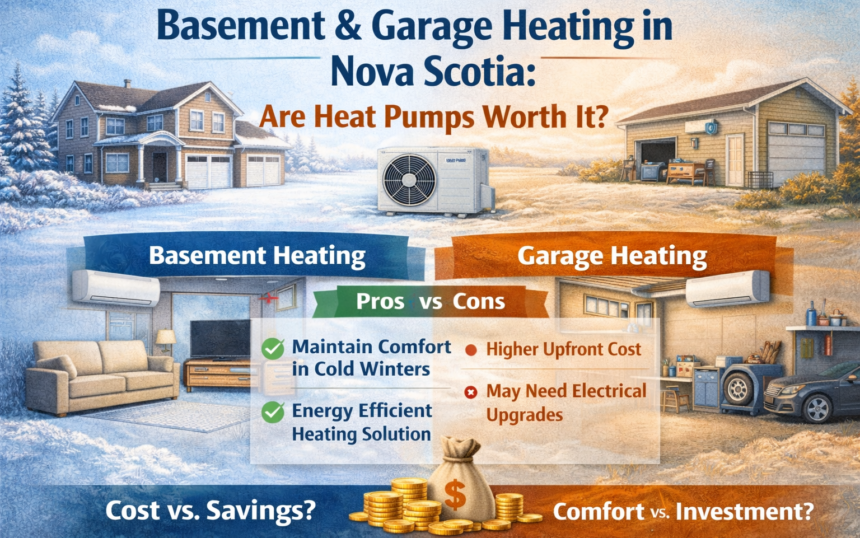
Heating a basement or garage in Nova Scotia isn’t as simple as turning up the thermostat. These spaces often have different insulation levels, moisture concerns, and usage patterns compared to the main living areas of your home.
Many homeowners ask whether a heat pump is the right solution — or if electric heaters, oil systems, or propane units make more sense.
The answer depends on how the space is built, how often it’s used, and how efficiently you want to heat it long term.
Why Basements Are Tricky to Heat in Nova Scotia
Basements in Nova Scotia homes are often cooler due to concrete foundations, limited insulation, and ground contact. Even well-insulated homes can have temperature differences between the main floor and the basement.
If you’re already upgrading insulation, review signs your home needs new insulation in Nova Scotia before adding new heating equipment. Fixing insulation gaps often reduces the size and cost of any heating solution.
Using a Heat Pump for Basement Heating
In many homes, a properly sized mini-split heat pump works extremely well for basement spaces — especially finished basements used as living areas, offices, or rental suites.
Benefits include:
- Efficient heating and cooling year-round
- Lower operating cost than electric baseboards
- Humidity control during damp seasons
- Improved comfort consistency
Correct sizing matters. If you’re unsure what capacity you need, review what size heat pump you need for your Nova Scotia home, since undersized or oversized systems reduce efficiency.
What About Garages?
Garages are different from basements. Most Nova Scotia garages are not insulated to the same standard as living spaces, and large overhead doors allow significant heat loss.
A heat pump can work in a garage if:
- The walls and ceiling are insulated
- Air sealing is properly completed
- The space is used frequently (workshop, gym, storage)
If insulation is poor, upgrading first may be more cost-effective. Compare insulation options in spray foam vs blown-in insulation in Nova Scotia before installing heating equipment.
Multi-Zone Systems for Additions & Separate Spaces
If you want to heat a basement, garage, and main floor separately, a multi-zone system may be ideal. This allows independent temperature control without overloading one system.
To understand how these systems compare, review multi-zone vs single-zone heat pumps in Nova Scotia homes. Zoning is especially useful when different parts of the house have different usage patterns.
Ducted Systems vs Mini-Splits for Larger Homes
For homeowners with existing ductwork, a central ducted heat pump may distribute heat more evenly throughout the home — including basement areas.
If you’re considering that route, read ducted heat pumps in Nova Scotia homes to compare benefits and installation considerations.
Cost Considerations
Operating cost is often the deciding factor. Electric space heaters are cheap to install but expensive to run. Oil heat works well but carries fuel volatility.
Heat pumps typically offer the best long-term operating efficiency, especially when paired with available heat pump rebates in Nova Scotia.
For homeowners replacing oil systems entirely, it’s also worth reviewing replacing oil heat with a heat pump in Nova Scotia to understand full-home transition options.
Final Thoughts
Basements and garages in Nova Scotia can absolutely be heated efficiently — but the right solution depends on insulation, usage, and system design.
In most cases, a properly sized heat pump provides the best balance of efficiency, comfort, and long-term cost control. However, addressing insulation and airflow first ensures the system performs the way it should.
If you’re planning to heat an additional space, start with proper load calculations and climate-appropriate equipment to avoid unnecessary operating costs.